Wood-Plastic Composites (WPC) Industry Analysis Report
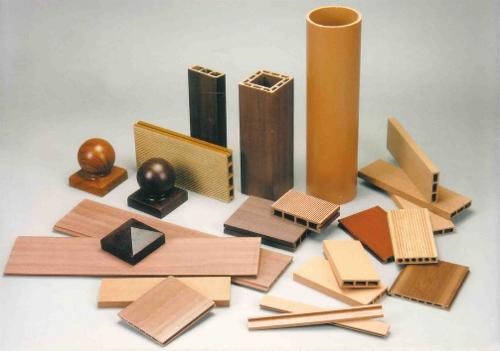
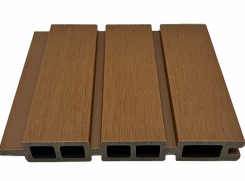
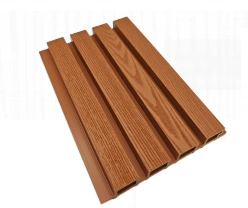
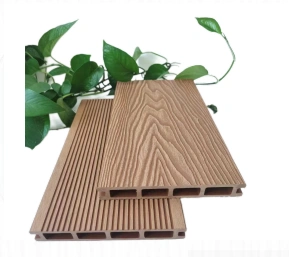
Wood-plastic composites (WPC) are composite materials formed by filling thermoplastic plastics with plant fibers and processing them through extrusion. Currently, there is no uniform terminology for it domestically and internationally; it is also referred to as plastic wood, eco-wood, tech-wood, recycled wood, polymer wood, etc.
WPCs possess many distinct advantages: compared to corresponding plastics, WPCs have better tensile strength, tensile modulus, hardness, flexural properties, and creep resistance, along with a more natural appearance; compared to wood, WPCs exhibit better dimensional stability, water resistance, maintainability, and processability; they have a certain degree of biodegradability and recyclability, offering good environmental benefits; they can utilize large amounts of waste plastics and agricultural/forestry waste such as wood flour, straw, and rice husk, resulting in low costs and helping to reduce white pollution.
Currently, various types of wood-plastic foamed composites have been produced, including PE-based, PP-based, PVC-based, PS-based, and PUR-based. Among these, PVC-based wood-plastic foamed composites are widely used due to their strong chemical stability, high strength, resistance to acid/alkali corrosion, water immersion, flame retardancy, and low cost. A typical WPC production process involves using hot mixing technology to thoroughly blend wood fibers with thermoplastic plastics, followed by shaping through extrusion, lamination, compression molding, or injection molding to obtain the final composite.
WPCs combine the easy moldability of thermoplastics with the secondary workability similar to wood, such as being cuttable, bondable, paintable, and offering advantages like insect resistance, aging resistance, low water absorption, and reusability. Consequently, they are widely used across various fields.
I. Packaging Industry
The most widely used WPC product internationally is pallets. In recent
years, China's pallet market has shown an overall upward trend, with an
annual production of approximately 300 million pallets and a market
inventory reaching around 145 million pallets.

II. Railway Sleepers
Currently, WPC railway sleepers are not used in large quantities due to
their relatively high cost but hold significant potential. How to
further reduce costs has become key to their widespread adoption.

III. Construction Industry
In the construction industry, WPCs are primarily used for decking,
window and door frames, and concrete formwork. Among these, decking has
seen the most rapid development. Although such decking is more expensive
than pressure-treated lumber, it requires less maintenance, is less
prone to cracking, and has good environmental compatibility. Building
doors and windows represent another important application area, where
WPC profiles offer advantages over traditional building materials in
terms of thermal insulation, corrosion resistance, and decoration.

IV. Gardens and Courtyards
In gardens and courtyards, WPCs are mainly used to manufacture outdoor
tables and chairs, courtyard railings and decorative panels, outdoor
flooring, waste bins, etc.

V. Automotive Interior Trim Components
In automotive interiors, brands such as Ford, Mercedes-Benz, Audi, BMW,
Toyota, Citroën, and Volvo use WPCs as substrate materials for
decorative parts in their vehicles. Judging from the automotive interior
parts showcased at recent international auto shows, using WPCs to
manufacture substrate materials for car interiors has become a trend in
this product category.

As an ideal environmentally friendly wood-alternative material, WPCs align with the global trend of promoting green environmental protection and low-carbon energy efficiency. They enable the efficient recycling of waste plastics and waste biomass resources, help solve white pollution, reduce deforestation, and support the national "Dual Carbon" goals. In recent years, WPCs have received strong support from national industrial policies.
From a market segmentation perspective, the application of plastic-wood composites in China's building materials industry is progressing well. The application of new technologies in WPC production will grant it greater expansion potential. Based on currently applicable WPC processes, these materials can expand from the construction sector into broader areas such as transportation, railways, shipping, automotive, appliances, and packaging, becoming strong competitors to traditional materials like wood, metal, plastic, ceramics, cement, and glass. This facilitates the maximum transfer and advancement of low-value materials into high-value application fields within resource utilization.
China is one of the countries with a relative shortage of timber resources globally. Structural contradictions between timber supply and demand are prominent, and conflicts between forest reserves, timber consumption, and rapid economic development are inevitable. Statistics show that producing 1 ton of WPC to replace natural wood can achieve a reduction of 7.5 tons of CO2 emissions and indirectly increase forest carbon sinks. The WPC industry can bring significant ecological and environmental benefits and is a typical low-carbon industry.
Current Status and Outlook of China's WPC Industry
Driven by both national circular economy policies and the potential
benefits sought by enterprises, a nationwide "WPC boom" has gradually
emerged. WPC enterprises are concentrated in the Pearl River Delta and
Yangtze River Delta regions, with the eastern region far surpassing the
central and western regions. Some individual enterprises in the east
have relatively advanced process levels, while southern enterprises hold
an absolute advantage in product quantity and market share. Test
samples from leading technical representative enterprises within the
industry have reached or exceeded international advanced levels.
WPCs are ideal new materials that substitute for both wood and plastic. Under the global trend of "green environmental protection, low-carbon, and energy efficiency," global demand for WPCs is growing steadily. Compared to European and American markets, WPC applications in China are not yet widely. Against the backdrop of the "Dual Carbon" goals and China's low self-sufficiency rate in timber, the domestic WPC industry has broad market prospects for the future.
Source:
This translation is based on the content from the article at: https://www.ccia.xin/zhuantibaogao/1937.html
Related Articles